


The choice between wooden or composite doors is really a choice between the new and the old for your home. Wood is the traditional material used for doors of all kinds, including front doors, whilst composite materials are a much newer innovation.
Many companies, including KLG Rutland, don’t offer any wooden exterior doors at all. If you have a look around our website, you’ll find that all of our front doors are composite and all of our back doors are uPVC.
Why is this the case? If wooden doors have served us all well for so long, why change now? Those are the questions that we’ll look to answer in this comprehensive composite doors buying guide.
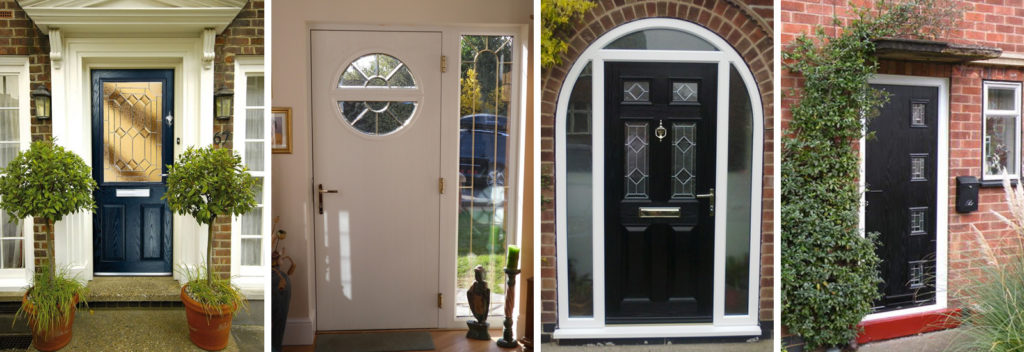
What are composite doors?
Composite doors are unique and specially manufactured doors that look like natural hardwood doors.
At KLG, all of our front doors are made from composite materials. We manufacture them from scratch here in the UK to ensure that the quality of the finish always meets our high expectations. The way that our composite doors are made, including both the materials and the processes, makes them durable and long-lasting. They retain their stunning appearance all year round and make houses both attractive and secure.
What are composite doors made from?
There are a number of different ways that a composite door can be made. To qualify as a composite material, the door simply needs to be made from multiple different materials – often some combination of wood, plastic and foam. Different composites have different properties, with some being notably stronger and more secure than others. KLG has invested in developing composite doors that are not only stronger than those of some other manufacturers, they also have a stunning coloured wood-effect appearance.
KLG Rutland’s composite doors contain various layers that work together to increase their sturdiness, strength and insulating properties. The outer layer of a composite door is made from Glass Reinforced Polymer, which can be manufactured to have a coloured wood finish that’s almost indistinguishable from natural wood.
The middle of the door is filled with environmentally friendly polyurethane foam, adding extra insulation without significantly increasing the weight of the unit. Finally, a layer of ABS plastic reinforcement runs through the centre of a composite door, giving it increased strength and security
Along with their increased stability and security of composite doors, the flexible manufacturing process allows us to offer bespoke door designs. You can choose the colours and patterns that you like the best.
At KLG Rutland, we also offer a diverse range of charming decorative glass for a beautiful finish. This allows you to personalise your door and create the ideal welcome to your home. Because of the way composite doors are made, we can actually change the glass panel without any trouble if our customers want to make a change later in the door’s lifespan.
Why are composite doors seen as a good replacement for wood?
Composite doors have largely replaced wooden doors in modern UK manufacturing because they are stronger, more durable and better insulators. On top of those qualities, they can also be manufactured to have an authentic wood-effect finish. As the name suggests, this means that the GRP is moulded in such a way that it looks like it has all the lines and patterns of natural hardwood. Therefore, you get all of the visual appeal of wood, with none of the drawbacks.
Why did wooden doors need to be replaced?
There are some significant drawbacks to wooden doors. As a natural material, wood is prone to degradation. A wooden door – especially an exterior door – requires treatment and maintenance in order to keep it looking and functioning as designed. Varnishing and painting are often required to restore their appearance, especially after periods of bad weather, and they are at risk of warping and cracking as the material naturally expands and contracts.
In comparison, composite doors are much more durable. They don’t lose their colour because the GRP itself is stained, rather than painted, which means the colour is an integral property of the material. They will retain their colour and shape whatever the weather, only needing the occasional wipe down to restore them to their original appearance.
Composite Doors vs uPVC Doors
Which are better, uPVC doors or composite doors for your Nottingham home? When it comes to choosing the perfect door for your home, it’s important to evaluate what materials would be most suited to your new door’s intended function. Weighing up uPVC vs composite doors, the latter are clearly advantageous for both front and back doors, though uPVC can still be a good option for the frames of larger patio doors. Consider the location and use of the door. For those looking for a front door or a regular back door, composite doors are by far the best option. However, if it’s a new patio door that you want, uPVC will work well for the frame.
| Feature | Composite Doors | uPVC Doors |
| Security | Excellent security | Less secure |
| Price | Slightly more expensive | Slightly cheaper |
| Recommended option | Front and back doors | Patio doors |
Advantages of composite doors
Longer lifespan
The average lifespan of our composite doors is 30+ years (and KLG’s warranty lasts for 10 years), due to the high quality and durability of the materials used to make them They require very little maintenance – an occasional wipe down will be enough to keep them looking as good as the day they were installed.
Safe and secure
The most fundamental requirement of your front door is that it must keep your home secure at all times. The majority of composite doors (including all doors made by KLG Rutland) have multi-point locking systems that make your composite doors as secure as possible. The strength of the materials used in their manufacture also adds to the overall security benefits. This is one of the main advantages of the ABS sheet that runs through the door’s centre.
KLG Rutland combines the strength of our doors with the safety provided by locks that have been approved by the Secured By Design initiative. This means that the locking mechanism – which can be a weak point on other doors – is as secure as the rest of the door.
Different styles
Composite doors can be manufactured in a number of different styles depending on your requirements. Various fittings available from KLG Rutland include distinctive letterboxes, lock fittings and handles to ensure your door is completely bespoke.
Thermal adaptability
KLG’s composite doors have been designed to be highly weather resistant. Given the famously unpredictable nature of the UK’s weather system, a robust sealing system on all composite doors can allow for a more thermal efficient home.
Should I invest in a composite door?
If you know you need a new front door, you can’t go wrong if you choose a composite door. It will look fantastic and give you excellent value over its decades-long lifespan. If you choose a door from KLG Rutland, you can also use our door designer to make sure that it looks exactly how you want it to.
On the other hand, if you’re considering a change from your current wooden door, it’s worth having a look at your options. For all their drawbacks, wooden doors can still last a long time and look good. However, if you’re starting to see signs of wear, degradation or discolouration, it might be the time to think about upgrading to a newer model. Have a closer look at composite doors and see if you could imagine one standing in the entrance of your home.
If you want to get a quote for a composite front door, contact KLG Rutland today.