


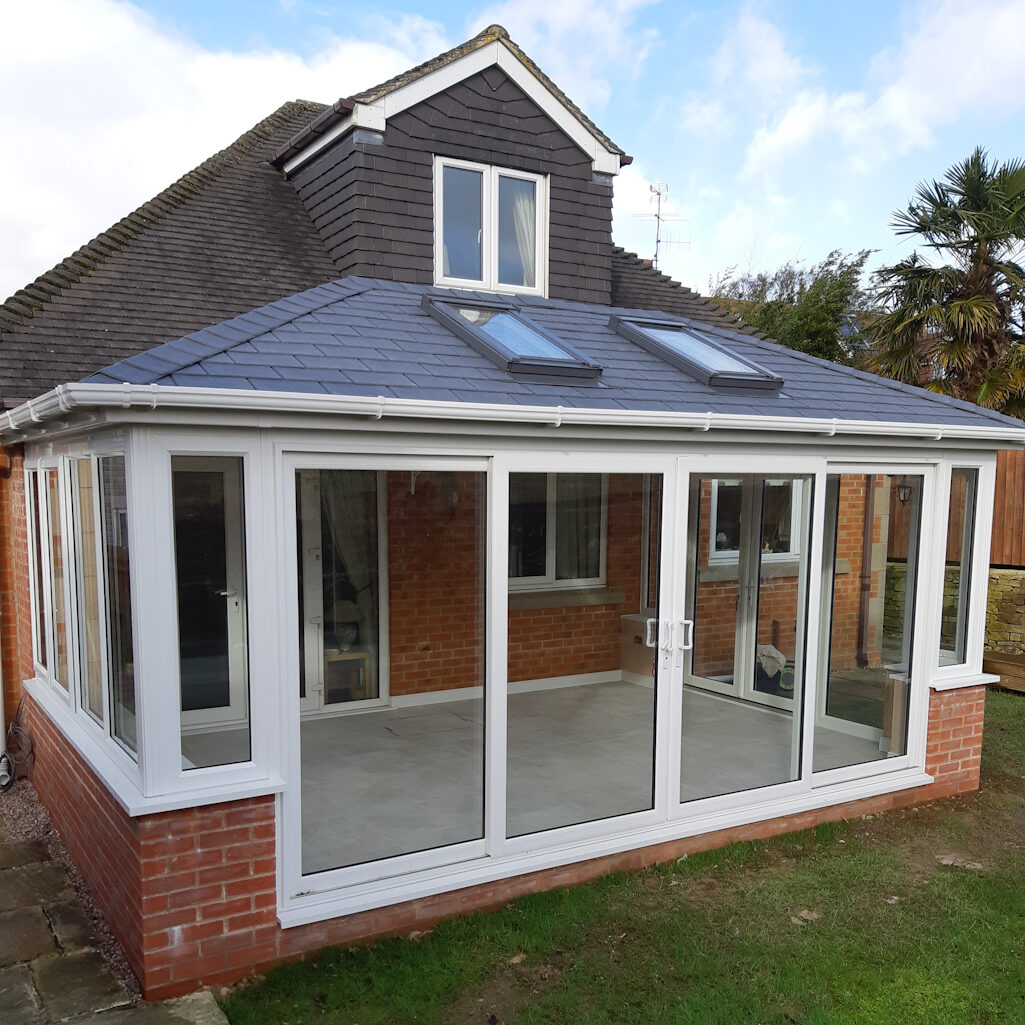
If you are thinking about adding a conservatory, one of the first questions you will ask is, do you need planning permission for a conservatory? The good news is that many conservatories can be built without a full planning application, but only if they stay within the permitted development rules that apply to house extensions in England. Conservatories are not treated as a separate planning category, they are assessed under the same planning framework as other home extensions.
That means the answer is rarely a simple yes or no. Your conservatory planning permission position depends on factors such as where the conservatory will sit, how big it is, whether your property is detached, semi-detached or terraced, whether earlier extensions have already used up part of your allowance and whether your home is listed or subject to local restrictions.
The other point many homeowners miss is that planning permission and building regulations are not the same thing. A conservatory may be permitted development for planning purposes, but that does not automatically mean all conservatory building regulations can be ignored. In 2026, that distinction still matters, especially if you want an open-plan layout or a more solid, extension-like finish.
The quick answer
In many cases, you do not need planning permission for a conservatory if it falls within permitted development rights. However, those rights only apply if the proposal stays within the size, height and location limits for house extensions, and if there are no extra restrictions on the property. If you go beyond those limits, full householder planning permission is likely to be needed.
When you usually DO NOT need planning permission for a conservatory
For most standard homes, a conservatory can be built under permitted development if it follows the same rules as a single-storey extension. In practical terms, that means:
- the conservatory must not cover more than half the land around the original house
- it must not project forward of the principal elevation
- it must not be higher than the existing roof
- must not have eaves higher than the existing eaves (if any part is within two metres of a boundary, the eaves height cannot exceed three metres)
Rear conservatories are usually the most straightforward. A single-storey rear conservatory can normally extend up to 4 metres beyond the rear wall of the original house if the property is detached, or 3 metres if it is semi-detached or terraced. The overall height must not exceed 4 metres.
Side conservatories can also be permitted development, but the rules are tighter. If the conservatory extends beyond the side of the original house, it must be single storey, no higher than 4 metres and no more than half the width of the original house.
It is also important to remember that councils assess these limits in the context of the original house, not just what is there now. In other words, earlier extensions count. A conservatory that looks modest on paper can still need permission if previous additions have already used up the permitted development allowance. Planning Portal defines the original house as the house as first built, or as it stood on 1 July 1948 if older.
Larger conservatories and prior approval
There is one area that causes a lot of confusion. Some larger rear conservatories may still be possible without full planning permission, but only through the prior approval process for larger home extensions. In England, this can allow a single-storey rear extension to project up to 8 metres on a detached house, or 6 metres on any other house, subject to conditions and neighbour consultation. It is not the same as a full planning application, but it is also not something you can simply build without telling the council.
So, if you are asking ‘do you need planning permission for a conservatory that goes beyond the standard three metre or four metre rear limits?’, the answer may be that you need prior approval, rather than full planning permission.
When conservatory planning permission IS likely to be required
You will usually need full householder planning permission if your conservatory goes beyond the permitted development limits. That includes cases where it would cover too much of the plot, project forward of the front elevation, exceed the allowed height or depth, or create a side extension that is too tall or too wide.
You are also more likely to need permission if your property is in an area with additional controls. Planning Portal notes that permitted development rights can be restricted or removed by planning conditions or an Article 4 direction, and that designated land such as conservation areas, National Parks, World Heritage Sites and the Broads can bring tighter rules. For example, side extensions on Article 2(3) designated land require householder planning permission.
Listed buildings are a separate issue again. If you want to alter or extend a listed building in a way that affects its character, you need listed building consent from the local planning authority, and unauthorised works can lead to enforcement action and problems when selling.
One final point, these simplified householder rules apply to houses, not flats or maisonettes. If the property is not a standard house, you should assume the position needs checking before work starts.
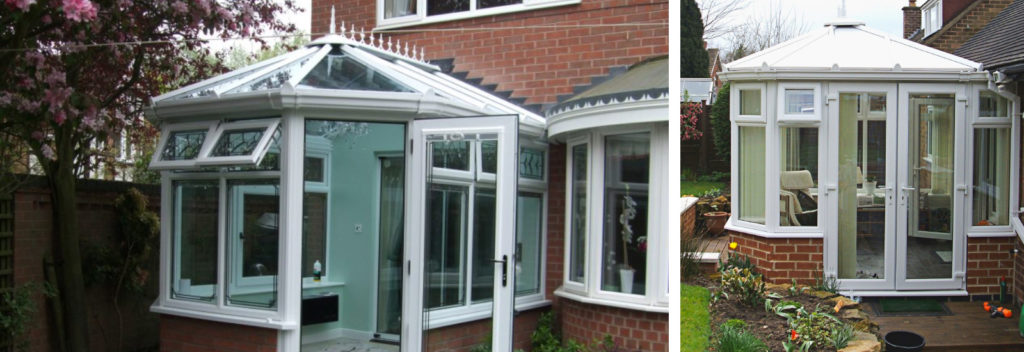
Conservatory building regulations explained
This is where many articles stop too early. Even if your conservatory does not need planning permission, you still need to understand conservatory building regulations.
Planning Portal states that conservatories are normally exempt from building regulations where all of the key conditions are met. In broad terms, the conservatory should be at ground level, single storey, less than 30 square metres in floor area, separated from the house by external quality walls, doors or windows and served by an independent heating system with separate temperature and on-off controls. Glazing and fixed electrical installations still need to comply with the relevant regulations.
The 2026 edition of Approved Document L also confirms that the energy efficiency exemption applies only where the extension is at ground level, no more than 30 square metres, has compliant glazing, keeps or replaces the wall, door or window separating it from the dwelling and does not extend the dwelling’s heating system into the conservatory.
That means a conservatory can be exempt in one sense, but still need certain parts of the work signed off. Planning Portal specifically notes that any new structural opening between the conservatory and the existing house requires building regulations approval, even if the conservatory itself is otherwise exempt.
The glazing rule many homeowners still hear about
You will often see older guidance saying a conservatory must be at least 50% glazed on the walls and 75% glazed on the roof. While Planning Portal now focuses more on the overall exemption conditions, many building control teams still describe exempt conservatories in those traditional terms. Warwick District Council, for example, states that an exempt conservatory should be less than 30 square metres, at ground level, with at least 50% of the walls and 75% of the roof made from transparent or translucent material, separated from the dwelling and served by independently controlled heating.
So, from a practical point of view, that 50% and 75% rule is still a useful benchmark when discussing conservatory building regulations with installers and building control.
Open-plan conservatories, doors and heating
Open-plan layouts are popular, but they are where conservatory rules often change. If you remove the doors or wall between the house and the conservatory and do not replace them, the conservatory can lose its exempt status for energy efficiency purposes. Planning Portal says that if a conservatory is not separated from the house by external quality walls, doors or windows, it loses its building regulations exempt status.
The same applies if you simply extend the home’s main heating into the conservatory. Under the 2026 Approved Document L guidance, keeping the dwelling’s heating system out of the conservatory is one of the conditions for exemption.
In simple terms, the more your conservatory behaves like a full extension, the more likely it is that full building regulations compliance will come into play.
2026 update, the old 4-year rule has gone
The biggest planning update homeowners should know in 2026 is not a new size limit for conservatories, it is the enforcement position for unauthorised work.
In England, the old four-year rule for enforcement against unauthorised building operations has been removed. GOV.UK says the four-year time limit for building or engineering operations and change of use to a single dwellinghouse has been removed, and a single 10-year limit now applies to all breaches of planning control. The change took effect on 25 April 2024.
That means homeowners should not assume an unlawful conservatory will become “safe” after four years in the way older online guides suggest. For operational development substantially completed on or after 25 April 2024, local planning authorities can take enforcement action for up to 10 years. The Commons Library briefing also confirms that the old four-year period has been replaced by ten years in all cases, subject to the transitional position for earlier breaches.
So, as a 2026 update, this is the crucial message: if a conservatory should have had permission and did not, the enforcement risk now lasts much longer than many homeowners realise.
Should you get a Lawful Development Certificate?
Even where planning permission is not needed, it can still be sensible to apply for a Lawful Development Certificate. Planning Portal describes this as a legal document confirming the lawfulness of proposed or existing work, and notes that it can be helpful later when selling the property or answering questions from buyers and solicitors.
That makes it a useful extra layer of reassurance for any homeowner relying on permitted development rights for a conservatory.
Frequently asked questions
Do you need planning permission for a conservatory on the front of a house?
Usually, yes. Permitted development does not allow an extension to be built forward of the principal elevation, or forward of a side elevation that fronts a highway.
Do you need planning permission for a conservatory on a detached house?
Not necessarily. Detached houses can usually have a single-storey rear conservatory up to four metres deep under standard permitted development rules, or up to eight metres through prior approval if the other conditions are met.
Do conservatories need building regulations?
Some do, some do not. A traditional, thermally separated conservatory can often be exempt if it stays under 30 square metres and meets the other conditions. But glazing, electrics and structural openings can still be controlled, and open-plan designs usually trigger fuller building regulations requirements.
Can I remove the doors between my house and the conservatory?
You can physically do it, but once the conservatory is no longer separated from the house by external quality doors, walls or windows, it can lose its exempt status and may require building regulations approval.
Do I need permission to replace a conservatory roof?
Possibly. Planning Portal says that if changing the roof significantly alters the structure or appearance, planning permission may be required, and any new roof must comply with building regulations for structural safety, energy efficiency and ventilation.
If you are researching conservatory planning permission in 2026, the safest way to think about it is this: many conservatories can still be built without a full planning application, but only if they sit comfortably within extension rules and only if the property is not affected by extra local restrictions. Separate from that, conservatory building regulations remain important, especially where doors are removed, heating is extended or the design starts to function more like a full extension.
And because the old four-year enforcement route has gone for newer breaches, it is more important than ever to get the planning position right before work starts, not after.